
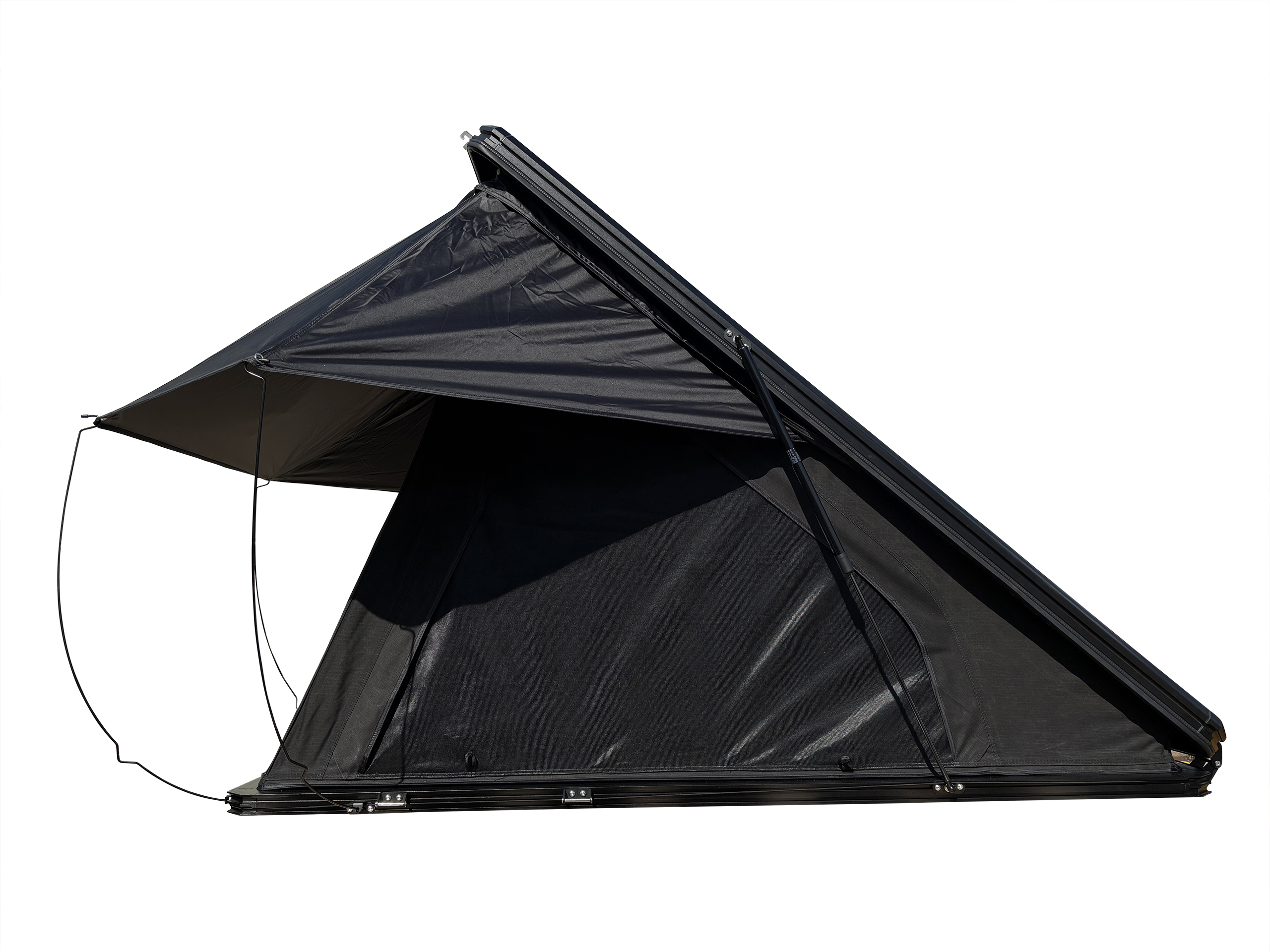
Isuzu D-MAX Canopy Rooftop Tent Guide: Weight, Ratings and Setup
A rooftop tent can turn an Isuzu D-MAX canopy setup into a fast, comfortable touring build. It keeps your sleeping setup off the ground, saves space inside the canopy for drawers and gear and makes weekend trips easier to set up and pack down.
But an RTT is not just another accessory. It adds significant weight high on the vehicle, affects handling, counts towards payload and needs the right roof rack or platform and canopy rating to be safe. Before fitting one to a D-MAX canopy, you need to check more than whether it physically bolts on.
Quick answer: can you put a rooftop tent on an Isuzu D-MAX canopy?
Yes, you can put a rooftop tent on a D-MAX canopy if the canopy, roof rack or platform, mounting system and vehicle setup are all rated for it. You need to check the dynamic load rating (while driving), the static load rating (while sleeping), the weight of the tent, the weight of the rack, the canopy roof rating, total payload and how the extra roof weight affects handling. Do not fit an RTT to a canopy unless the full system is rated for that use.
Can You Put a Rooftop Tent on a D-MAX Canopy?
Yes, but only with the right rated setup
A rooftop tent can work on a D-MAX canopy, but every part of the system needs to be rated for it. The canopy must be suitable for roof loading. The rack or platform must be rated for the RTT weight. The mounting points and brackets must be appropriate. The tent weight must sit within the dynamic load rating while driving. The static load must cover the tent plus occupants while parked. And the total weight, including canopy, rack, tent and everything else on the vehicle, must stay within payload and GVM limits.
“It bolts on” does not mean it is safe
A rooftop tent fitting kit can make an RTT physically attach to a rack. That does not prove the canopy roof, rack system or vehicle setup is suitable for the load. Before fitting an RTT, check the canopy manufacturer’s published roof load rating, the rack or platform rating, the vehicle roof rating (if using cab mounted racks), dynamic and static load figures, off road suitability, payload impact and warranty conditions.
Common mistake: Fitting a rooftop tent because the brackets physically bolt to the rack rails, without checking whether the canopy roof underneath is actually rated for that weight. Physically possible and structurally safe are two very different things.
The lowest rated part of the system matters
If the rack is rated higher than the canopy, the canopy rating is the limit. If the canopy is rated higher than the rack, the rack rating is the limit. If the mounting brackets are weak, they are the limit. The safe capacity is not the highest number in the setup. It is the lowest rated part of the whole system.
Dynamic vs Static Load: The Biggest RTT Confusion
This is where most rooftop tent mistakes happen. Dynamic and static load are different numbers for different situations.
What is dynamic load?
Dynamic load is the weight the roof system can safely carry while the D-MAX is moving. It accounts for forces from braking, cornering, corrugations, rough tracks, highway driving, wind, emergency manoeuvres and off road angles.
Canopy dynamic roof load ratings vary significantly depending on material and construction. Some fibreglass canopies sit around 40 to 80 kg dynamic. Standard aluminium canopies commonly range from 80 to 150 kg. Premium aluminium canopies with cantilever rack systems can reach 200 to 250 kg dynamic. The specific canopy product determines the number, not just the material.
What is static load?
Static load is the weight the roof system can support while the vehicle is parked. It matters when the rooftop tent is open, people are sleeping in it, bedding is inside and the tent ladder is loaded.
Static ratings are typically two to three times higher than dynamic ratings. A canopy rated for 100 kg dynamic might handle 250 to 300 kg static. A premium system rated for 200 kg dynamic might support up to 600 kg static. This is the rating that applies when sleeping in the tent.
Why static rating is usually higher than dynamic rating
A parked vehicle is not dealing with braking, cornering, corrugations or road shock. That is why the same roof structure can support more weight when stationary. But static load still matters because it needs to cover the tent weight, rack weight, bedding and one or two occupants (easily 150+ kg of people alone).
Rack weight counts before the tent
This catches people out constantly. If a canopy roof load limit is 100 kg dynamic and the platform weighs 25 kg, the usable cargo allowance for the rooftop tent and other roof accessories is 75 kg, not 100 kg. The rack itself is part of the load.
Add up: platform or bars, mounting feet, backbone rails, RTT mounting brackets, awning brackets, recovery board mounts, shovel holders and any other permanently mounted hardware. Whatever remains after subtracting all of that from the dynamic rating is what you have for the actual tent and cargo.
D-MAX Canopy Roof Load: What Actually Needs to Be Rated?
The vehicle roof
If mounting the RTT to the cab roof rather than the canopy, check the vehicle’s factory roof rail rating, rack fitment and load capacity. Factory roof rail ratings on the D-MAX typically sit around 60 to 100 kg dynamic depending on variant. For most RTT setups, the canopy roof is the better mounting option because it usually offers more area and a higher load rating.
The canopy roof
If mounting to the canopy (which is the more common and usually more practical approach), check the canopy’s published dynamic and static roof load ratings, whether internal support bracing is required, mounting track or rail rating, roof bar or platform compatibility and whether the canopy manufacturer specifically permits RTT use. Some canopy warranties may be voided if an RTT is mounted without the manufacturer’s approval.
The roof rack or platform
The rack or platform has its own separate rating. Check its dynamic load rating, static load rating, off road load rating (some manufacturers derate for extended corrugated road use), mounting hardware suitability, RTT compatibility, whether the tent base is properly supported across the bars or platform and whether the load is evenly distributed.
The mounting brackets
Do not ignore brackets. RTT brackets, platform clamps, bolt quality, spreader plates, track mounting hardware, anti vibration fittings and corrosion resistance all matter. Brackets that loosen over time from corrugation vibration are a real risk. Regular torque checks before major trips should be part of the routine.
Off road use increases stress
Corrugations, rough tracks and beach driving put significantly more stress on roof mounted loads than smooth bitumen. A rooftop tent that handles fine on the highway may behave very differently after hours of corrugated gravel. Some canopy manufacturers recommend reducing dynamic load ratings for extended off road use.
Best Canopy Type for a D-MAX Rooftop Tent
Aluminium canopy
Aluminium is usually the best canopy material for a D-MAX rooftop tent setup. It offers practical structural strength, better accessory mounting, good compatibility with roof rack and platform systems and suits the kind of touring builds that typically pair with an RTT.
Premium aluminium canopies with cantilever rack systems can offer dynamic load ratings of 200 to 250 kg, which comfortably handles most rooftop tents plus a platform and basic roof accessories. Even standard aluminium canopies commonly offer 80 to 150 kg dynamic, which can work for lighter RTTs with the right rack setup.
Important caveat: Not every aluminium canopy is automatically RTT rated. The exact canopy and rack system still need to be confirmed. For a detailed comparison of how aluminium and fibreglass canopies differ on the D-MAX for roof load capacity and accessory mounting.
Fibreglass canopy
Fibreglass canopies can be excellent for daily driving and lifestyle use, but they should not be assumed suitable for a rooftop tent unless the manufacturer specifically rates them for that load. Fibreglass dynamic roof load ratings typically sit around 40 to 80 kg, which may not leave enough capacity for a platform and RTT once the rack weight is subtracted.
Some fibreglass canopies with internal reinforcement and bracing can handle higher loads. But the default assumption should be “check before mounting,” not “it will probably be fine.”
Steel canopy
Steel canopies offer strength, but the weight trade off is significant. A heavy steel canopy plus a heavy roof platform plus a rooftop tent can stack serious weight onto the D-MAX. For most private touring builds, aluminium offers a better balance of roof load capacity and overall vehicle weight management.
Tray canopy
For serious custom touring builds on cab chassis D-MAX models, a tray canopy can offer the strongest and most customisable roof platform integration. Tray canopy setups are typically engineered around the intended load from the start, which makes them well suited to RTT builds. The trade off is higher cost and a bigger build commitment.
Hard Shell vs Soft Shell Rooftop Tent for a D-MAX
Hard shell RTT
Hard shell tents (including clamshell and wedge styles) are popular for D-MAX touring builds because they are faster to set up, have a more compact packed profile, better wind resistance when closed and suit frequent touring and weekend trips.
Typical weight range: 60 to 90+ kg depending on size and brand.
Pros: Fast setup and pack down. Lower wind drag when packed. Cleaner look on the roof. Good for solo, couple or small family touring.
Cons: Can be heavier than some soft shell options. Usually more expensive. Takes up more roof platform space. May limit room for other roof accessories beside the tent.
Soft shell RTT
Soft shell fold out tents can offer a larger sleeping area for the money and may be lighter in some configurations.
Typical weight range: 45 to 70+ kg depending on size and brand.
Pros: Often more affordable. Can offer a larger sleeping footprint when opened. May pack lighter in some designs.
Cons: More setup time. More fabric management. Can have higher wind profile when packed depending on design. May still be heavy once bedding and ladder are included.
Which is better for a D-MAX canopy?
For most D-MAX canopy touring builds, a hard shell or wedge style RTT is the more practical choice because it packs neatly, sets up fast and sits lower on the platform. But the decision should be based on weight, size, budget and how often you camp, not just which looks better on the roof.
Rooftop Tent Weight and Payload on a D-MAX
RTT weight is only part of the total roof load
A rooftop tent does not sit on the roof alone. Count the tent, the platform or bars, mounting brackets, awning, recovery board mounts, solar panel, shovel and axe mounts, bedding inside the tent and any roof box or extra gear.
Example roof weight stack
These are planning ranges, not fixed specs:
| Roof item | Example weight range |
| Roof bars (pair) | 5 – 15 kg |
| Full roof platform | 20 – 35+ kg |
| RTT mounting hardware | 3 – 10 kg |
| Soft shell RTT | 45 – 70+ kg |
| Hard shell RTT | 60 – 90+ kg |
| 270 degree awning | 20 – 35+ kg |
| Recovery boards and mounts | 8 – 15 kg |
| Solar panel and mounts | 8 – 20 kg |
| Shovel, axe and accessories | 3 – 10 kg |
A full touring platform with a hard shell RTT, 270 degree awning, recovery boards and a solar panel can total 130 to 200+ kg above the canopy. That is significant weight at the highest point of the vehicle.
Payload still matters
The RTT and everything on the roof counts towards the D-MAX’s GVM. So does the canopy, drawers, fridge, water, recovery gear, passengers, dogs, camping gear and tow ball download if towing. The D-MAX’s payload ranges from roughly 930 to 1,310 kg depending on variant. The current D-MAX holds a five star ANCAP safety rating, but that rating assumes the vehicle is operating within its rated weight limits. A touring build with an RTT can consume a large portion of that payload budget before passengers and towing are factored in.
For a full breakdown of how canopy weight, accessories and payload interact on the D-MAX platform, including GVM, GCM and weight planning.
RTT weight sits high
A rooftop tent raises the D-MAX’s centre of gravity. This affects body roll in corners, stability on rough tracks, wind sensitivity, emergency handling, off road lean on side slopes, fuel consumption and overall vehicle behaviour. The heavier the tent and the higher it sits, the more noticeable these effects become.
Parking height and garage clearance are also practical considerations. A D-MAX with a canopy, platform and RTT can easily exceed 2.4 metres total height, which may not fit in standard garages or multi storey car parks.
Rooftop Tent and Towing: What D-MAX Owners Should Know
RTT plus towing adds up quickly
A D-MAX owner towing a caravan or camper trailer may already have tow ball download, passengers, a loaded canopy with drawers and fridge, water, tools, recovery gear, roof racks and an awning on the build. Adding an RTT on top can push the setup closer to payload or handling limits.
The D-MAX is rated for up to 3,500 kg braked towing when fitted with the required Isuzu tow bar and electronic brake controller. But that towing figure does not tell you how much payload is left once the RTT, canopy, accessories and passengers are loaded. For a deeper look at how GVM upgrades work and when D-MAX canopy owners should consider one.
Caravan owners may not need an RTT
If the caravan already provides sleeping space, an RTT may be unnecessary weight and cost. It can make sense for overflow sleeping, solo side trips or kids who want their own tent. But if the primary accommodation is the caravan, think carefully before adding 60 to 90 kg of sleeping weight to the roof.
Best D-MAX RTT Setup by Use Case
Weekend camping setup
Best for: Short trips, beach weekends, occasional camping.
- Rated aluminium canopy
- Roof bars or compact platform
- Lightweight RTT (soft shell or compact wedge)
- Simple awning
- Minimal other roof accessories
- Basic drawers or storage tubs inside canopy
Avoid: Heavy platform plus heavy RTT plus unused accessories. If you only camp a few weekends a year, a heavy permanent RTT setup may not justify the weight and cost.
Regular touring setup
Best for: Multi day trips, High Country, long distance touring, regional travel.
- Aluminium canopy with rated roof
- Full roof platform
- Hard shell or wedge RTT
- 270 degree awning (if used frequently)
- Drawers and fridge slide inside canopy
- 12V system with dual battery
- Dust sealing
- Recovery gear stored low inside canopy where possible
For a complete guide to building a practical D-MAX touring canopy setup that integrates an RTT with drawers, fridge, awning and 12V power.
Family camping setup
Best for: Family trips, kids, school holiday camping.
- Larger soft shell RTT with annex if needed
- Careful roof rating check (larger tents are heavier)
- Lighter storage system inside canopy
- Awning for daytime shade
- Water and dog gear stored inside canopy
- Keep other roof accessories minimal to preserve capacity for the tent
Lightweight RTT setup
Best for: Payload conscious owners, daily drivers who also camp, towing owners, occasional campers.
- Lightweight aluminium canopy
- Roof bars instead of full platform if suitable
- Compact lightweight RTT
- No unnecessary roof accessories
- Removable storage inside canopy
Trade plus camping setup
Best for: Tradies using the D-MAX during the week and camping on weekends.
- Aluminium canopy
- Trade roof bars or platform (only if rated for RTT)
- Removable RTT setup if possible (some tents can be unbolted for workdays)
- Keep tool weight separate from camping weight
- Check payload before weekend trips with the RTT loaded
For a trade specific guide covering how to set up a D-MAX canopy for daily tool use alongside weekend camping.
Roof Bars or Roof Platform for a D-MAX RTT?
Roof bars
Roof bars can work for lighter RTTs with simpler setups. They are lighter than a full platform, cheaper, create less wind resistance and suit occasional RTT use.
The downside is fewer mounting points, less even tent base support (the tent sits only on two or three crossbars) and less flexibility for mounting awnings, recovery boards and solar panels alongside the tent.
Roof platform
A full platform is usually better for regular touring builds with an RTT. It provides better support across the tent base, more mounting points for accessories and a cleaner integrated setup for awnings, recovery boards and solar panels.
The trade off is more weight, more cost and more wind drag. A platform also encourages overloading because it looks like there is room for everything. For a detailed guide to D-MAX canopy roof rack and platform options, including load ratings and mounting locations.
Recommendation
For a simple, lightweight RTT setup, rated roof bars may be enough. For a regular touring build with awnings, recovery boards, solar and accessory mounts, a properly rated platform usually makes more sense.
Where Should the RTT Be Mounted: Cab, Canopy or Tray?
Cab roof
Usually less ideal for RTTs. The cab roof area is smaller, the factory roof rail rating may be lower than a canopy roof rating and the setup puts the tent above the cab rather than above the storage area. Can work with the right rated rack system, but canopy mounting is usually more practical for D-MAX touring builds.
Canopy roof
The most common and usually most practical choice for D-MAX RTT setups. More roof area, easier integration with canopy storage and awning, better camp layout with the tent above the gear and canopy roofs can be specifically rated for RTT use.
The canopy must be rated. The rack or platform must be rated. Internal bracing may be required. Rear heavy builds with a loaded canopy, RTT and tow ball download need payload and axle load checks.
Tray canopy roof
Best for serious custom touring. Tray canopy setups can be purpose built around RTT use with stronger platform integration. Higher cost but the most engineered option.
Do not bridge cab and canopy unless designed for it
The cab and canopy or tub can move independently during driving. A long rigid rack or RTT platform should not be mounted across both structures unless the system is specifically designed for that movement. Bridging cab and canopy with a rigid structure can cause stress cracking, seal damage and mounting point failure.
What We Recommend at Oz Canopies & 4×4
For most D-MAX owners considering a rooftop tent, we recommend starting with a rated aluminium canopy and a properly matched roof platform, then confirming the full weight stack before committing to a specific tent.
Do not buy the tent first and then try to make it work. Start with the canopy, confirm the roof rating, choose the platform, subtract the platform weight from the dynamic rating and then choose a tent that fits within the remaining capacity.
If you are towing, carrying tools, running drawers, adding a 270 degree awning or travelling with passengers and dogs, check the full weight picture before adding an RTT. Sometimes a lighter tent, a simpler platform or a different sleeping solution makes more sense for the overall build.
Call us on 02 9627 8666, text 0440 130 098 or visit our showroom at 20 Walker St, South Windsor, Sydney.
RTT Setup Checklist for a D-MAX Canopy
Before buying the tent, check every item on this list.
| Item | What to confirm |
| Canopy rating | Published dynamic and static roof load, RTT suitability |
| Rack or platform rating | Dynamic, static and off road rating |
| Tent weight | Packed weight including ladder and hardware |
| Rack weight | Bars or platform plus mounting hardware |
| Occupant weight | Static load while sleeping (tent + people + bedding) |
| Mounting system | Brackets, bolts, support spacing, anti vibration |
| Load distribution | Even support under tent base |
| Payload | Full vehicle load: canopy, drawers, gear, passengers, tow ball |
| Centre of gravity | Handling, wind, off road stability |
| Access | Ladder position, awning position, tailgate clearance |
| Height | Garage clearance, car parks, low branches, fuel economy |
| Warranty | Canopy, rack and tent warranty conditions |
| Future accessories | Awning, solar, recovery boards, lights |
Common D-MAX Rooftop Tent Mistakes
Confusing static and dynamic load
Static load at camp is not the same as dynamic load while driving. A setup that is fine at camp can be dangerously overloaded on the highway or on corrugated tracks.
Forgetting rack and platform weight
The tent is not the only roof weight. The platform, brackets and mounting hardware all count towards the dynamic load limit. Subtract them first.
Assuming every canopy can hold an RTT
It cannot. The canopy must have a published roof load rating that covers the RTT, rack and accessories. If the canopy does not publish a rating, do not mount an RTT to it.
Mounting too much gear around the RTT
An RTT plus a full platform plus a 270 degree awning plus recovery boards plus a solar panel plus a shovel bracket can add 150+ kg above the canopy. That is a lot of high mounted weight. Consider whether every item needs to be on the roof. The National Transport Commission’s Load Restraint Guide for Light Vehicles reminds drivers that loads must be properly restrained during normal driving, including heavy braking and cornering. Roof mounted gear needs to be secured just as carefully as gear inside the canopy.
Ignoring payload
Everything counts towards GVM: tent, rack, canopy, drawers, fridge, passengers, water, tools and tow ball download. Australian Design Rules (ADRs), administered by the Department of Infrastructure, set baseline vehicle safety standards, but the owner is responsible for ensuring the total loaded weight stays within the vehicle’s rated limits. Vehicle Standards Bulletin 14 (VSB 14), also published by the Department of Infrastructure, provides the national technical requirements for vehicle modifications if a GVM upgrade is needed. In New South Wales, GVM upgrades typically require certification by an approved engineer, with documentation submitted to Transport for NSW for registration update.
Overbuilding a weekend setup
If you only camp a few times a year, a heavy RTT build may not be the best use of payload or money. A swag inside the canopy, a ground tent or a camp stretcher under an awning can be lighter, cheaper and more flexible alternatives.
Forgetting car park and garage height
A D-MAX with a canopy, platform and RTT can easily exceed 2.4 metres total height. Check garage clearance, multi storey car park limits and low hanging branches on access tracks before committing to a permanent roof mounted setup.
Not checking warranty
Canopy, rack and tent warranties may all depend on correct rated installation. Mounting an RTT to a canopy that is not rated for it or overloading a rack beyond its published capacity, can void warranty coverage on all three products.
Is a Rooftop Tent Worth It on a D-MAX Canopy?
When it is worth it
An RTT can make sense if you camp often, want fast setup and pack down, do not tow accommodation, want to keep canopy space for drawers and gear, travel on mixed terrain where ground sleeping is not ideal, prefer sleeping off the ground and have the correct rated setup with payload capacity to spare.
When it may not be worth it
An RTT may not make sense if you only camp occasionally, already tow a caravan or camper trailer with sleeping space, have tight payload after canopy, tools and passengers are loaded, park in low clearance areas, need roof space for trade gear like ladders, do not want high mounted weight affecting handling or mainly drive in urban areas where the height causes practical problems.
Alternative sleeping setups
Before committing to an RTT, consider a swag or stretcher inside the canopy, a quality ground tent, an awning and camp stretcher setup, a trailer or camper with built in sleeping or a removable RTT that can be unbolted when not camping. For a broader look at how to budget for a D-MAX canopy setup including RTT, platform and touring accessories.
D-MAX Rooftop Tent: FAQs
Can you put a rooftop tent on an Isuzu D-MAX canopy?
Yes, but only if the canopy, roof rack or platform, mounting system and vehicle setup are all rated for the rooftop tent weight. Do not fit an RTT to an unrated canopy.
What roof load rating does a D-MAX canopy need for an RTT?
It depends on the tent weight, rack weight and other roof accessories. As a rough guide, the canopy’s dynamic load rating minus the rack and bracket weight must still comfortably cover the packed RTT weight.
Can a fibreglass D-MAX canopy hold a rooftop tent?
Only if the specific fibreglass canopy is rated for that use. Fibreglass dynamic ratings typically sit around 40 to 80 kg, which may not leave enough capacity after the rack weight is subtracted. Check with the canopy manufacturer.
Is an aluminium canopy better for a rooftop tent?
Usually yes. Aluminium canopies typically offer higher dynamic roof load ratings and better accessory mounting than fibreglass, which makes them more suitable for RTT setups. For a look at how canopy fitment, model year and body style affect what accessories you can mount.
Do I need a roof platform for a rooftop tent?
Not always. Some RTTs can work with properly rated roof bars. But a platform provides better support, more mounting points and is usually recommended for regular touring builds.
Does a rooftop tent affect D-MAX payload?
Yes. The tent, rack, platform, mounting hardware and accessories all count towards payload and GVM.
Can I use a rooftop tent while towing a caravan?
You can, but it may be unnecessary and adds weight. Check payload, tow ball download, GVM and GCM before adding an RTT to a towing setup.
What is better: hard shell or soft shell RTT for a D-MAX?
Hard shell tents are usually faster to set up and better for frequent touring. Soft shell tents can be more affordable and may offer more sleeping space. The best choice depends on weight, budget and how often you camp.
Can I mount a rooftop tent across the cab and canopy?
Only if the system is specifically designed for it. The cab and canopy can move independently during driving, so rigidly bridging both structures can cause damage.
Is a rooftop tent worth it on a D-MAX canopy?
It is worth it if you camp often, have the correct rated setup and can manage the extra roof weight within your payload budget. It may not be worth it for occasional camping, tight payload setups or caravan owners who already have sleeping space. Understanding what drawer systems fit inside a D-MAX canopy helps plan how much internal space the RTT saves compared to storing a swag or sleeping gear inside.
Quick Decision Guide
Use this to figure out whether an RTT is right for your D-MAX.
- What is your canopy’s published dynamic roof load rating? If you do not know, find out before looking at tents.
- What does the rack or platform weigh? Subtract this from the dynamic rating. The remainder is your RTT and accessory budget.
- What does the RTT weigh? Check the packed weight including ladder and hardware. Compare it against the remaining dynamic capacity.
- How often do you camp? Monthly or more: an RTT is worth the investment. A few times a year: consider lighter alternatives.
- Do you tow? If yes, every kilo on the roof is a kilo less for passengers, gear and tow ball download. Keep the setup light.
- Can you fit it in your garage? Measure total height before buying. A D-MAX with canopy, platform and RTT can exceed 2.4 metres.
- Have you checked the full weight stack? Canopy, drawers, fridge, rack, tent, awning, recovery gear, passengers and tow ball download. If the total is close to GVM, reassess the build or consider a GVM upgrade.
The best RTT setup is not the biggest tent you can fit on the roof. It is the lightest, safest and most practical setup for the way you actually travel.
Call us on 02 9627 8666, text 0440 130 098 or visit our showroom at 20 Walker St, South Windsor, Sydney.
