
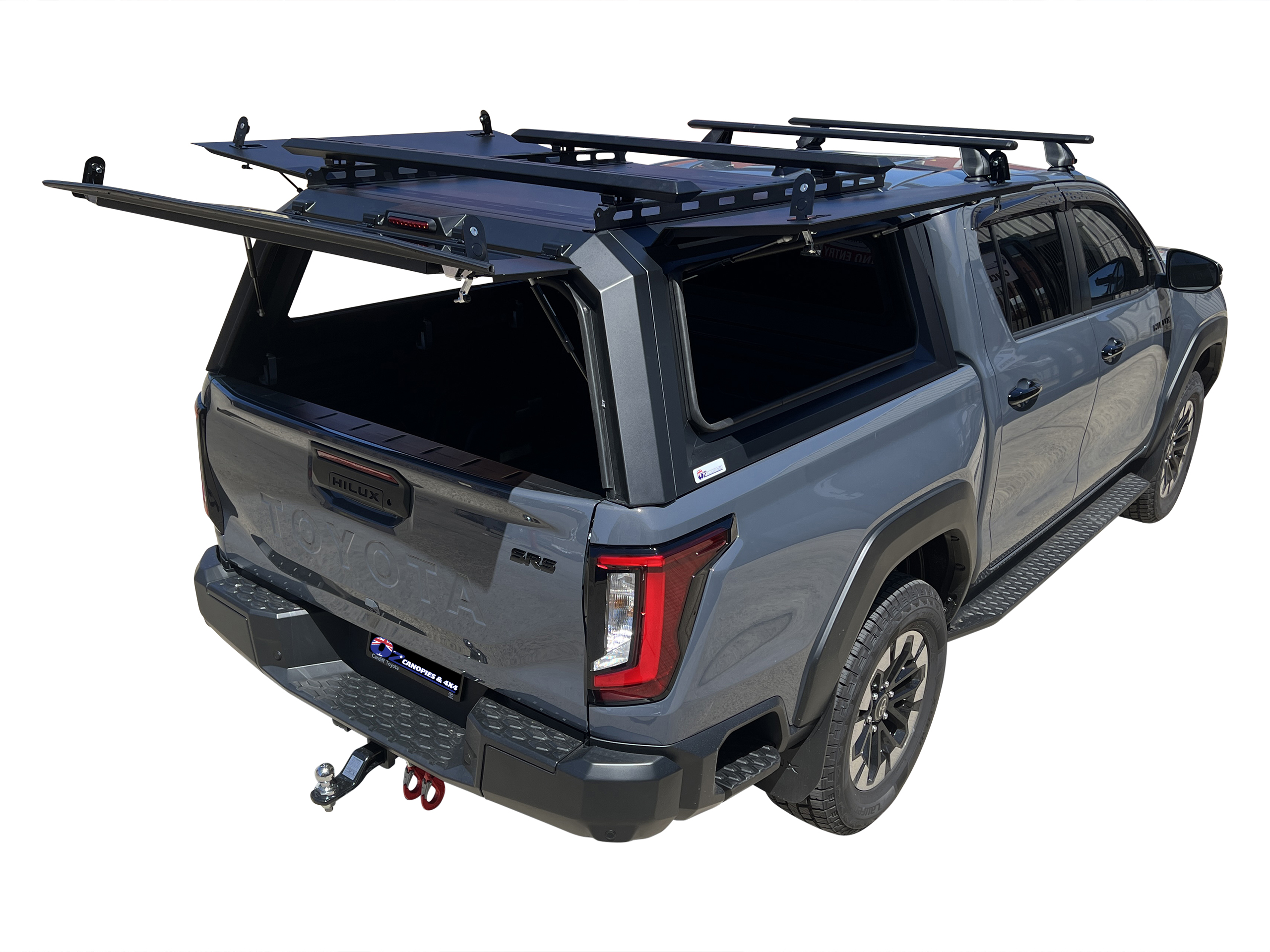
Salt and Coastal Corrosion: Protecting Your HiLux Canopy
Salt is patient. It does not punch holes in a canopy overnight. It finds bare metal through a scratch, a stone chip or a worn seal and then it works slowly and relentlessly until the rust is visible. By then, the damage underneath is usually worse than what you can see on the surface.
If your HiLux lives near the coast, does regular beach runs, crosses tidal creeks or sits in a humid salt air environment most of the year, corrosion management is not optional. It is the difference between a canopy that lasts a decade and one that looks tired after three years.
This guide covers how salt attacks different canopy materials, what to protect first, the maintenance routine that actually works, what to look for during inspections and the common mistakes that turn minor surface issues into expensive structural damage. For the full HiLux canopy decision framework, our Toyota HiLux canopy setup guide covers every option from material to fitout.
Quick Answer: How Do You Protect a HiLux Canopy From Salt Corrosion?
The short version:
- Rinse the canopy with fresh water after every beach trip or salt exposure. This is the single most effective thing you can do.
- Touch up paint chips and scratches immediately. Bare metal plus salt equals rust. A $5 touch up pen prevents a $500 repair.
- Inspect and maintain seals regularly. Salt degrades rubber faster than dry inland conditions.
- Lubricate locks, hinges and hardware quarterly. Salt corrodes moving parts from the inside out.
- Choose aluminium over steel if corrosion resistance is a priority. Aluminium does not form red oxide rust.
- Protect dissimilar metal junctions. Where steel bolts meet aluminium panels, galvanic corrosion is a real risk.
- Store the canopy clean. Do not park the ute covered in salt residue for days or weeks.
These seven steps prevent the vast majority of coastal canopy corrosion. None of them are expensive. All of them require consistency.
How Salt Attacks a HiLux Canopy
Surface Corrosion
Salt water and salt spray settle on the canopy’s exterior surfaces. On steel, salt accelerates oxidation wherever the protective coating (powder coat, paint or galvanising) has been compromised. Stone chips, scratches from loading, hinge wear and UV degradation all create entry points.
On aluminium, the powder coat protects the surface. When the coating is chipped, the exposed aluminium can develop white oxidation rather than red rust, but it still looks patchy and can weaken the surface over time.
On fibreglass, the shell itself does not corrode, but the hardware does. Hinges, locks, gas strut fittings, roof rail bolts and any metal component attached to a fibreglass canopy is still vulnerable.
Crevice Corrosion
Salt water collects in crevices: hinge barrels, lock mechanisms, bolt heads, clamp junctions, seal channels, sliding window tracks and anywhere two surfaces meet with a small gap. Once salt water enters a crevice, it stays. Fresh air cannot circulate to dry it out and the concentration of salt in the trapped moisture increases as water evaporates. This accelerates corrosion in the exact places that are hardest to see and hardest to repair.
Galvanic Corrosion
When two different metals are in contact in the presence of an electrolyte (salt water qualifies), one metal corrodes faster than the other. This is galvanic corrosion and it is extremely common on canopy setups where steel bolts, stainless fasteners, aluminium panels and zinc plated hardware all meet.
The most common example: steel mounting bolts through an aluminium canopy. The aluminium around the bolt hole corrodes faster than it would on its own because of the dissimilar metal contact. The same applies to stainless steel fasteners in aluminium panels, zinc plated clamps on painted steel and any junction where different metals touch.
Under the AS/NZS 4680 standard for hot dip galvanised coatings, managing dissimilar metal contact is part of good corrosion practice. In practical terms: use isolation washers, dielectric grease or compatible fasteners at every junction where two different metals meet.
Underside and Hidden Corrosion
Salt does not only attack what you can see. It collects on the underside of the canopy where it overhangs the tub rails, inside hinge barrels, behind rubber seals, under rack mounting feet, inside wiring conduit and around brake light housings. These hidden areas corrode without visible warning until the damage becomes structural.
How Each Canopy Material Handles Salt
| Material | Corrosion Behaviour | Main Risk | Maintenance Priority |
| Steel | Red oxide rust where coating is damaged | Scratches, chips, stone damage | Touch up paint, rinse, inspect regularly |
| Aluminium | White oxidation, no red rust | Galvanic corrosion at fastener points | Isolate dissimilar metals, rinse, check fasteners |
| Fibreglass | Shell does not corrode | Metal hardware corrodes independently | Lubricate and protect all metal fittings |
| ABS | Shell does not corrode | Metal hardware corrodes independently | Same as fibreglass: focus on hardware |
Steel Canopies in Coastal Environments
Steel is the most vulnerable to salt corrosion. Powder coated steel resists well when the coating is intact, but every scratch, chip and worn edge is an entry point. Coastal steel canopy owners need to be vigilant about touch ups and rinses after salt exposure.
The real danger zone on steel canopies is the lower edge where the canopy sits on the tub rails. This junction traps moisture, sand and salt between the canopy and the tub. If the seal degrades or gets pushed aside, salt water sits against bare metal permanently.
Common mistake: Assuming powder coating is permanent protection. Powder coat chips. It wears at contact points. It gets scratched during loading. Every breach is a corrosion entry point in a salt environment.
Aluminium Canopies in Coastal Environments
Aluminium is the strongest coastal choice because it does not form red oxide rust. It can develop white surface oxidation when the powder coat is breached, but this is far less destructive than steel rust and does not compromise structural integrity in the same way.
The main aluminium risk in coastal environments is galvanic corrosion at fastener junctions. Steel bolts through aluminium panels, stainless brackets on aluminium rails and mixed metal mounting hardware all create galvanic pairs that accelerate corrosion when salt water is present.
Use nylon isolation washers, dielectric grease on fastener threads and compatible fastener materials wherever possible. Inspect mounting points and hardware after beach trips.
Fibreglass and ABS Canopies in Coastal Environments
The shell material itself does not corrode, which is a genuine advantage in coastal use. But every piece of metal hardware on the canopy (hinges, locks, gas strut fittings, central locking actuators, brake light housings, roof rail bolts and mounting clamps) is still subject to salt corrosion.
Fibreglass canopy owners in coastal areas still need to rinse, lubricate and inspect hardware regularly. The shell may last forever, but the locks, hinges and struts will not if they are neglected.
For a full comparison of canopy materials, our steel vs aluminium vs fibreglass HiLux canopy comparison covers every trade off. And our fibreglass vs aluminium HiLux canopy comparison covers the two most common coastal material choices in detail.
The Coastal Maintenance Routine That Actually Works
After Every Beach Trip or Salt Exposure
This is non negotiable for coastal HiLux canopy owners. It takes 10 to 15 minutes and prevents 90% of salt corrosion damage.
- Rinse the entire canopy with fresh water. Top, sides, underneath, around doors and windows and especially the canopy to tub junction. Use a garden hose, not a pressure washer (high pressure can force water past seals).
- Open all doors and windows. Let the interior air out. Check for salt spray that may have entered through seal gaps.
- Rinse sliding window tracks. Salt and sand in tracks cause binding and corrode the track channel. Flush them clean.
- Check for new scratches or chips. If you find bare metal, touch it up before parking the ute. Do not leave it until next weekend.
- Dry lock mechanisms. Spray a light lubricant (silicone spray or similar) into lock barrels and latch mechanisms. Salt water in a lock barrel corrodes it from inside.
- Rinse mounting clamps and tub junction. Lift the canopy seal edge if accessible and flush out any trapped sand and salt.
Monthly (Coastal Residents)
If the HiLux lives within a few kilometres of the coast and is exposed to salt air daily, add these monthly checks:
- Inspect all rubber seals for cracking, perishing and loss of compression. Salt air degrades rubber faster than dry inland conditions.
- Check hinge barrels for stiffness or discolouration. Stiff hinges may indicate internal corrosion.
- Inspect gas strut fittings for surface corrosion. Replace struts that show pitting around the mounting eyes.
- Check roof rack mounting feet and bolts. Remove any visible corrosion and apply protective coating or grease.
- Inspect the canopy to tub junction for moisture staining. Discolouration on the tub rails or canopy lower edge indicates trapped moisture.
Every Six Months (Coastal Residents)
- Remove mounting clamps and inspect the tub rail surface underneath. Clean, dry and re grease contact points.
- Inspect all wiring penetrations. Salt can corrode electrical connectors, causing intermittent faults in brake lights, interior lights and central locking.
- Check central locking actuators for sluggish operation. Salt ingress causes slow or incomplete locking cycles.
- Apply a fresh coat of protective wax or coating to the canopy exterior if the surface is showing signs of coating wear.
| Maintenance Task | Frequency | Time Required | Cost |
| Fresh water rinse | After every salt exposure | 10 to 15 minutes | Free (garden hose) |
| Paint touch up | As needed | 5 minutes per chip | $5 to $20 (touch up pen) |
| Lock and hinge lubrication | Monthly | 10 minutes | $10 to $20 (silicone spray) |
| Seal inspection | Monthly | 10 minutes | Free (visual check) |
| Mounting point inspection | Every 6 months | 30 minutes | Free to $50 (grease, washers) |
| Full hardware check | Every 6 months | 45 minutes | Varies |
Common mistake: Driving home from the beach on Friday and leaving the ute covered in salt until Monday. Two days of salt sitting on chipped paint in humid coastal air does more damage than a week of driving on dry inland roads.
Protect the Parts That Fail First
Locks and Latches
Salt enters lock barrels through the keyhole, through latch gaps and through condensation inside the mechanism. Once inside, it corrodes the spring, the pins and the cylinder. The lock becomes stiff, then unreliable, then seized.
Prevention: spray silicone lubricant into lock barrels monthly. Work the lock several times to distribute the lubricant. Wipe excess from the exterior.
Hinges
Hinge barrels trap moisture between the pin and the barrel. Salt water in this space corrodes the pin and the barrel wall. Stiff hinges are often the first sign.
Prevention: lubricate hinge barrels quarterly with a penetrating oil or silicone spray. Work the door through its full travel to distribute lubricant.
Gas Struts
Gas strut mounting eyes and rod ends are exposed to spray and splash. Corrosion at the mounting eyes weakens the connection. Corrosion on the rod can damage the seal, causing the strut to lose pressure.
Prevention: wipe strut rods and mounting eyes after rinses. Replace struts that show pitting or stiffness.
Electrical Connectors
Salt corrodes electrical contacts, causing resistance, intermittent faults and complete failure. Brake light connectors, interior light wiring, central locking plugs and 12V accessory connections are all vulnerable.
Prevention: use dielectric grease on all plug connections. Check connectors for green or white corrosion deposits during six monthly inspections. Our 12V electrical setup for HiLux canopies covers proper connector protection.
Mounting Hardware
Clamps, bolts, brackets and spacers that hold the canopy to the tub are exposed to splash, spray and trapped moisture. Corroded mounting hardware weakens the entire canopy attachment.
Prevention: remove and inspect clamps every six months in coastal environments. Clean threads, apply anti seize compound or grease and replace any hardware showing significant corrosion.
Seals Degrade Faster in Coastal Conditions
Rubber seals on doors, windows and the canopy to tub junction degrade faster in coastal environments due to a combination of salt exposure, UV radiation, heat cycling and humidity.
Signs of seal degradation:
- Visible cracking or splitting
- Loss of elasticity (the seal does not spring back when compressed)
- Flattening (the seal no longer creates a firm seal against the door or tub)
- Dust or water trails inside the canopy
- Mould or mildew around seal edges
Replace seals before they fail completely. A worn seal that lets salt spray into the canopy interior creates a corrosion environment inside the canopy where tools, electronics and fittings are exposed.
Our how to dust proof your HiLux canopy covers seal inspection, testing and replacement.
Beach Driving Adds Extra Risk
Beach driving exposes the canopy to salt spray from the tyres, sand abrasion on lower panels and seals, salt water splashes around the tub junction and sand and salt ingress through every small gap. After beach driving, the rinse routine is even more important.
Additional precautions for regular beach drivers:
- Rinse the underside of the canopy overhang and the tub rails. Salt saturated sand collects here and holds moisture against the metal.
- Check and clean sliding window tracks thoroughly. Beach sand in a sliding track causes binding, scratching and seal damage.
- Inspect tyre spray areas on the canopy lower panels. Repeated sand blasting wears through powder coat and paint faster than normal road use.
- Open the canopy and air it out completely after beach trips. Trapped humid air inside a sealed canopy accelerates corrosion on internal hardware.
Our lift up vs sliding vs pop out HiLux canopy windows covers how different window types handle sand and dust, including the specific maintenance issues with sliding tracks in coastal use.
Protecting a Steel Canopy in Coastal Conditions
Steel canopy owners near the coast have the highest maintenance burden, but with consistent care, a steel canopy can last well in coastal conditions.
The Protection Layers
| Protection Layer | What It Does | When to Check |
| Powder coat | Primary barrier against moisture | After every loading session and beach trip |
| Touch up paint | Fills coating breaches | As soon as bare metal is visible |
| Wax or protective coating | Additional surface barrier | Every 3 to 6 months |
| Isolation washers | Prevents galvanic corrosion at mount points | At installation and every 6 month inspection |
| Anti seize compound | Protects fastener threads | Every time hardware is removed and refitted |
| Dielectric grease | Protects electrical connections | At installation and during inspections |
| Fresh water rinse | Removes salt before it can attack | After every salt exposure |
The most important rule for coastal steel canopy owners: do not leave bare metal exposed. A touch up paint pen in the glovebox and the discipline to use it immediately is worth more than any other corrosion product.
Protecting an Aluminium Canopy in Coastal Conditions
Aluminium canopy owners have a lighter maintenance burden because the base material does not red rust. But complacency kills aluminium canopies too, usually at the fastener points.
Focus Areas
- Dissimilar metal junctions. Every bolt, clamp, bracket and fastener that touches the aluminium panel. Use isolation washers and dielectric grease.
- Roof rack mounting feet. Steel or stainless rack feet on aluminium rails create galvanic pairs. Check quarterly.
- Tub clamps. Steel clamps on aluminium canopy flanges. Inspect and grease every six months.
- Central locking wiring. Connectors near door edges where salt spray enters.
Our best HiLux canopy roof racks guide covers rack mounting options including material compatibility considerations.
What We Recommend at Oz Canopies & 4×4
For coastal HiLux owners, we recommend aluminium canopies as the starting point. Our heavy duty aluminium HiLux canopies at $2,499 do not rust, handle salt air and beach conditions better than steel and the weight saving gives more payload for the gear you carry.
If budget dictates steel at $1,999, the canopy will still perform well in coastal conditions with proper maintenance: rinse after every salt exposure, touch up chips immediately, lubricate locks and hinges monthly and inspect mounting hardware every six months.
For fibreglass buyers at $2,999+, the shell is corrosion proof, but every piece of hardware still needs the same care as a metal canopy.
Whichever material you choose, the single most effective thing you can do is rinse the canopy with fresh water after every beach trip. It costs nothing and prevents almost everything. Browse our full HiLux canopy range to see what is available for your model.
Common Coastal Corrosion Mistakes
- Leaving salt on the canopy for days after a beach trip
- Ignoring paint chips and scratches on steel canopies (“it is just cosmetic” until it rusts through)
- Never lubricating locks, hinges or gas strut fittings
- Using a pressure washer that forces water past seals
- Assuming aluminium canopies need no maintenance (galvanic corrosion at fasteners is real)
- Assuming fibreglass canopies need no maintenance (hardware still corrodes)
- Forgetting to rinse the canopy to tub junction where salt and sand collect
- Not checking sliding window tracks after beach trips
- Ignoring discolouration or stiffness in hinges and locks
- Using dissimilar metal fasteners without isolation washers or protective grease
- Parking on the beachfront overnight without rinsing afterward
Frequently Asked Questions
Will a steel canopy rust near the coast? It can, if the powder coat is damaged and the bare metal is exposed to salt. With consistent maintenance (rinse after salt exposure, touch up chips promptly, lubricate hardware), a steel canopy can last well in coastal conditions.
Is aluminium better than steel for coastal use? Yes, for corrosion resistance. Aluminium does not form red oxide rust. The main coastal risk for aluminium is galvanic corrosion at fastener junctions, which is manageable with isolation washers and dielectric grease.
Does fibreglass corrode? The fibreglass shell does not corrode. But every metal component (locks, hinges, gas struts, mounting hardware, electrical connectors) is still vulnerable to salt corrosion and needs regular maintenance.
How often should I rinse the canopy? After every beach trip or salt exposure. If the HiLux lives near the coast and is exposed to salt air daily, a weekly rinse is a good habit even without direct beach driving.
What is galvanic corrosion? It occurs when two different metals are in contact in the presence of moisture (especially salt water). One metal corrodes faster than it would on its own. It is common where steel bolts meet aluminium panels on canopy setups.
Can salt damage canopy seals? Yes. Salt, UV and heat degrade rubber seals faster than dry inland conditions. Inspect seals monthly in coastal environments and replace them before they fail completely.
Should I wax my canopy? A protective wax or marine grade coating adds a barrier, but it does not replace the need for rinsing and touch up maintenance. Wax is a supplement, not a substitute.
Will central locking be affected by salt? Yes. Salt can corrode actuator mechanisms, wiring connectors and lock barrels. Use dielectric grease on connectors and lubricate lock barrels monthly to prevent salt related failures.
Your Decision Guide: Protecting Your HiLux Canopy From Salt
Coastal corrosion protection comes down to three habits:
- Rinse. Fresh water after every salt exposure. The canopy, doors, windows, tracks, locks, hinges and the tub junction. 10 to 15 minutes prevents 90% of salt damage.
- Touch up. Every scratch, chip and coating breach on steel or aluminium canopies. Immediately. A $5 paint pen today prevents a $500 panel repair later.
- Lubricate. Locks, hinges, gas struts and fasteners. Monthly in coastal environments. Silicone spray, penetrating oil and dielectric grease are your tools.
If you do those three things consistently, any canopy material will serve you well near the coast. If you do not, even the best material will deteriorate.
Live near the coast and need canopy advice?
Tell us your HiLux model and how close you are to salt exposure. We will recommend the right material and help you plan a maintenance routine that keeps the canopy in good condition long term. Call us on 02 9627 8666, text 0440 130 098 or visit our showroom at 20 Walker St, South Windsor, Sydney.
